September 01, 2026
Inside DLM’s BIM Coordination Process: From Design Information to Resolved Model
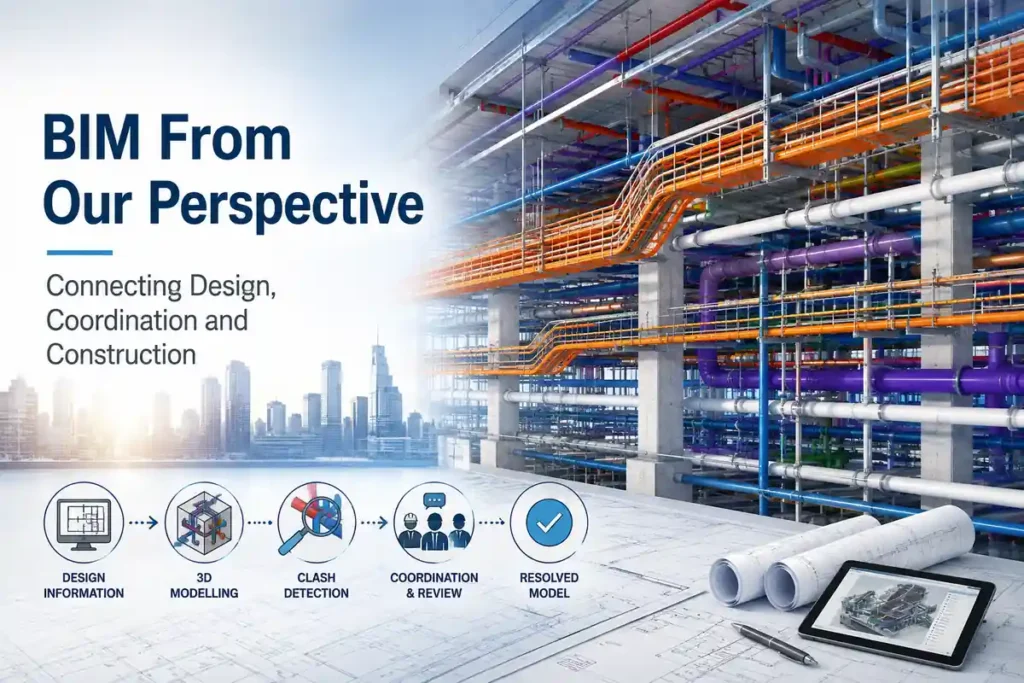
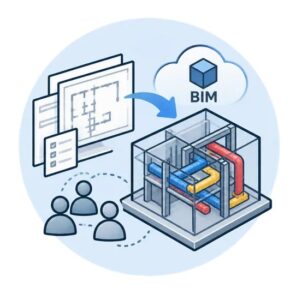
Building Information Modelling (BIM) is often associated with creating 3D models, but from a BIM Modeler’s perspective, modelling is only one part of the process. The real value comes from bringing different building services together, identifying potential issues and working with the project team towards a coordinated solution.
At DLM, the BIM coordination process starts with understanding the design information and project requirements before developing the services within a shared 3D environment.
DESIGN
DETECT
From Design Information to 3D Modelling
Design Information → Review Requirements →
3D Modelling → Coordination
Before modelling begins, the available design drawings, specifications and project requirements are reviewed to understand the intended system arrangement and coordination requirements.
Building Information Modelling (BIM) is often associated with creating 3D models, but from a BIM Modeler’s perspective, modelling is only one part of the process. The real value comes from bringing different building services together, identifying potential issues and working with the project team towards a coordinated solution.
Before modelling begins, the available design drawings, specifications and project requirements are reviewed to understand the intended system arrangement and coordination requirements.
This information then becomes the basis for developing the services within the BIM model, where the different disciplines can be viewed together in a shared 3D environment.
Identify Clashes Before They Become Bigger Issues
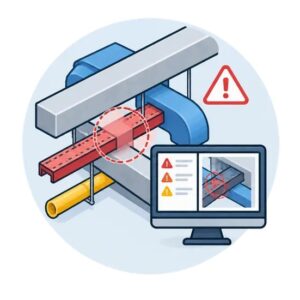
Once the different services are brought together, potential spatial conflicts become easier to identify.
For example, an electrical cable tray may cross an ACMV duct, a proposed routing may encounter a structural beam, or several services may compete for the same limited space.
This is where clash detection becomes an important part of BIM coordination.
However, detecting a clash does not automatically provide the solution.
Simply moving one service may resolve one conflict while creating another further along the routing. Changes can also affect clearances, openings, supports, accessibility and other previously coordinated services.
From a BIM Modeler’s perspective, it is therefore important to look beyond the individual clash and understand how a proposed adjustment affects the surrounding model.
COORDINATE
RESOLVE
Coordination Is a Team Process
Resolving these issues requires communication between different members of the project team.
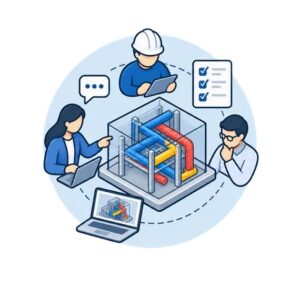
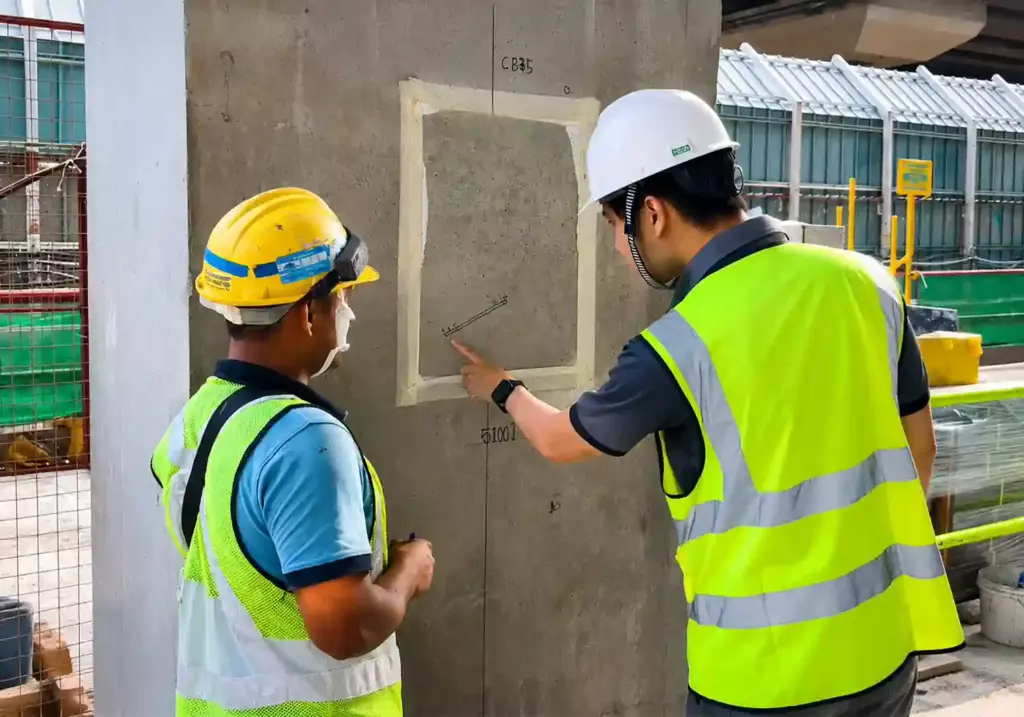
At DLM, BIM Modelers work alongside engineers, project personnel and other relevant disciplines to review coordination issues and develop practical solutions based on the project requirements.
The 3D model provides a common visual reference during this process. Instead of relying only on individual drawings, teams can see where the issue occurs, understand the surrounding constraints and review how a proposed solution may affect other services.
Once a solution has been reviewed and agreed upon, the updated routing or arrangement can then be incorporated into the BIM model and reflected in the relevant drawings.
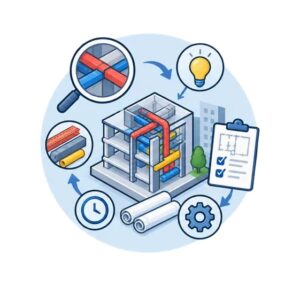
This continuous process of modelling, reviewing, coordinating and resolving helps keep project information aligned as the design develops.
More Than a Clash-Free Model
For us, BIM coordination is not simply about achieving a model with zero clashes.
A coordinated model should represent the design requirements while also considering the space available for the different building services and the practical challenges that may arise during implementation.
Behind every coordinated BIM model are multiple discussions, revisions and decisions involving people from different areas of the project.
From design information to 3D modelling, clash detection and finally resolution, each stage contributes towards creating clearer and more coordinated project information.
BIM is More Than The Model
At DLM, BIM helps us connect design information, building services and project teams — identifying issues early and developing coordinated solutions that reflect the agreed design.
Build Your Future in Engineering with DLM
Start your engineering career with DLM and grow alongside a team committed to innovation and excellence.
Quality Standards in Mechanical & Electrical (M&E) Engineering
At DLM Pte Ltd, quality, safety, and sustainability define the way we work.
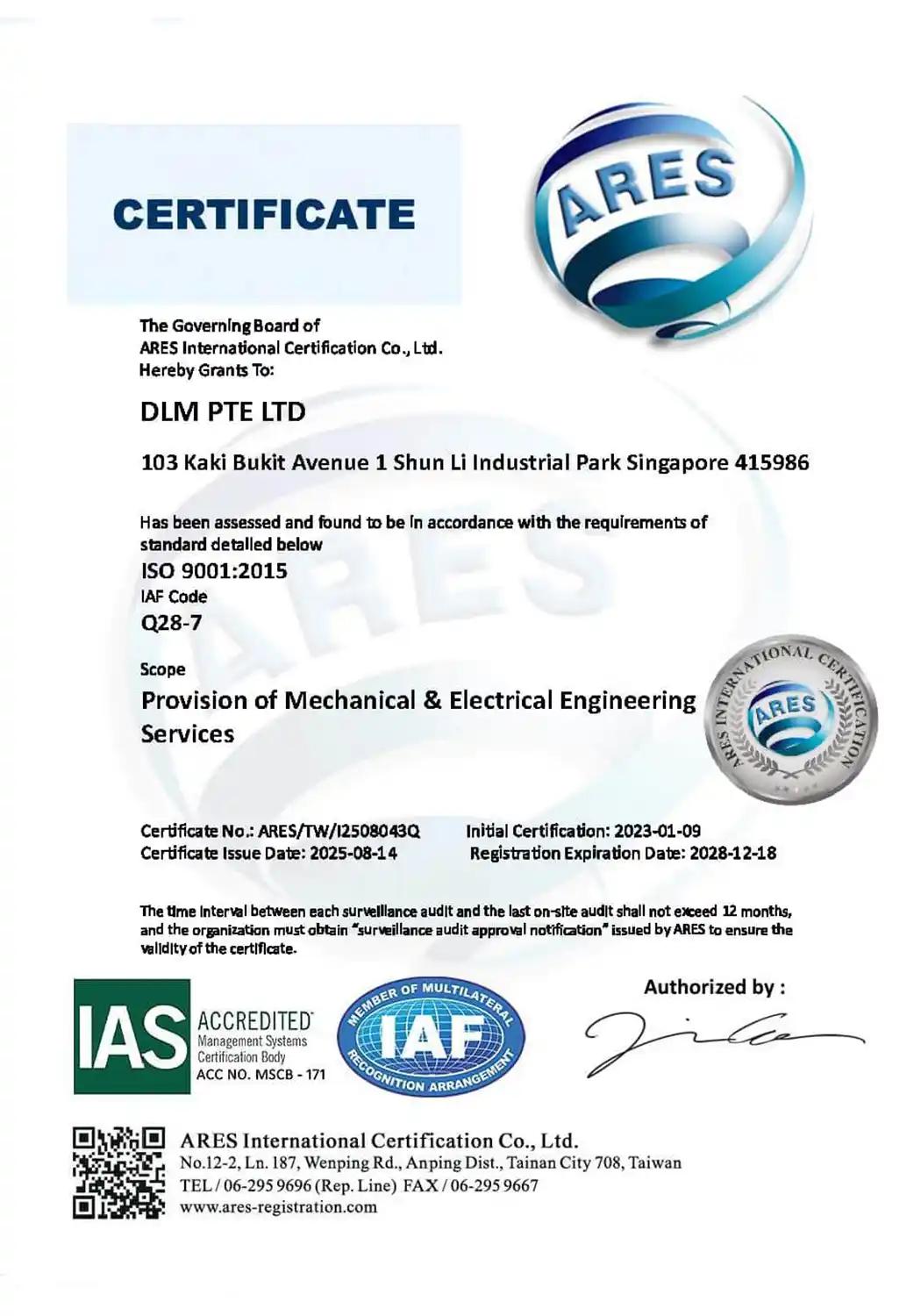
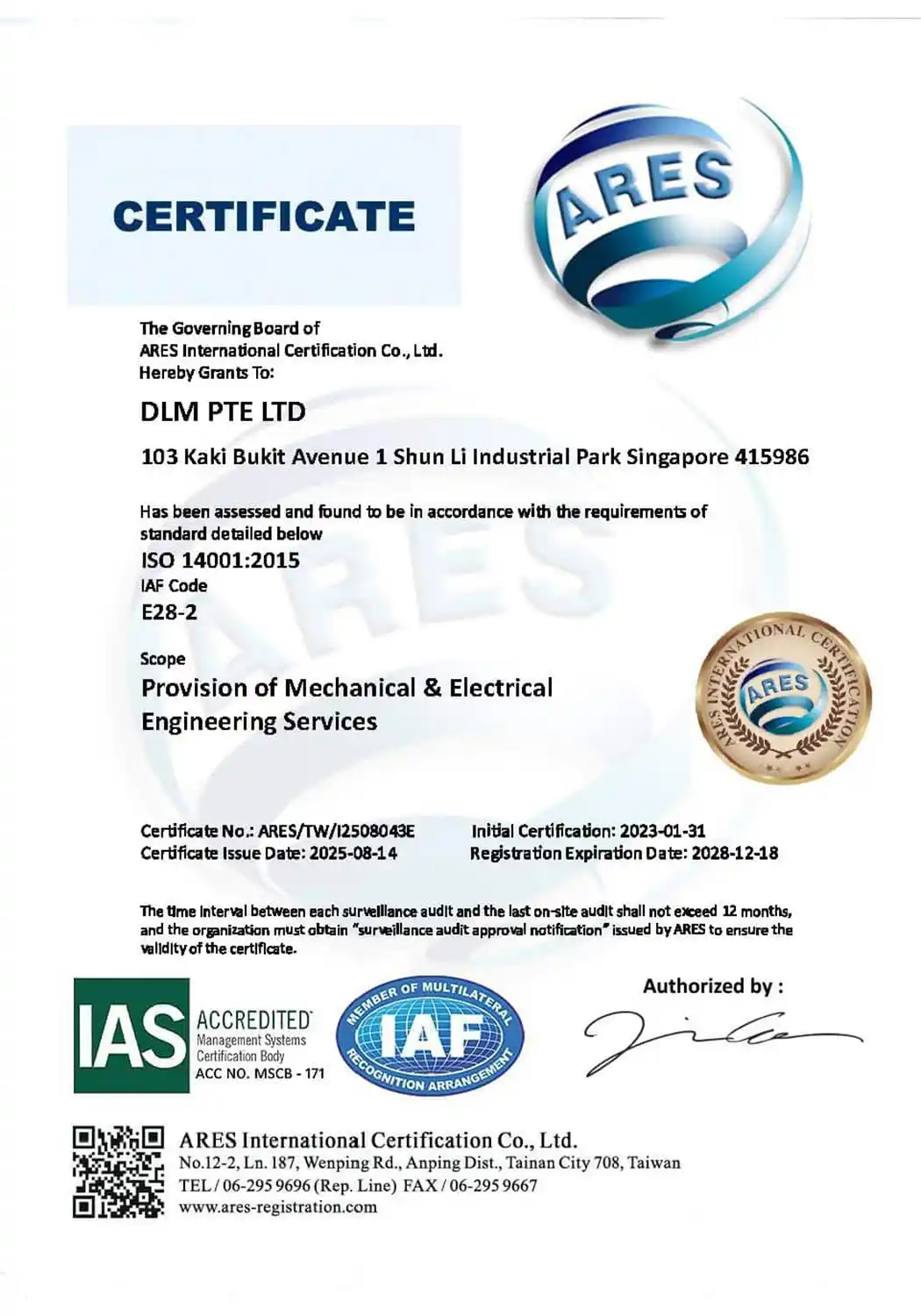
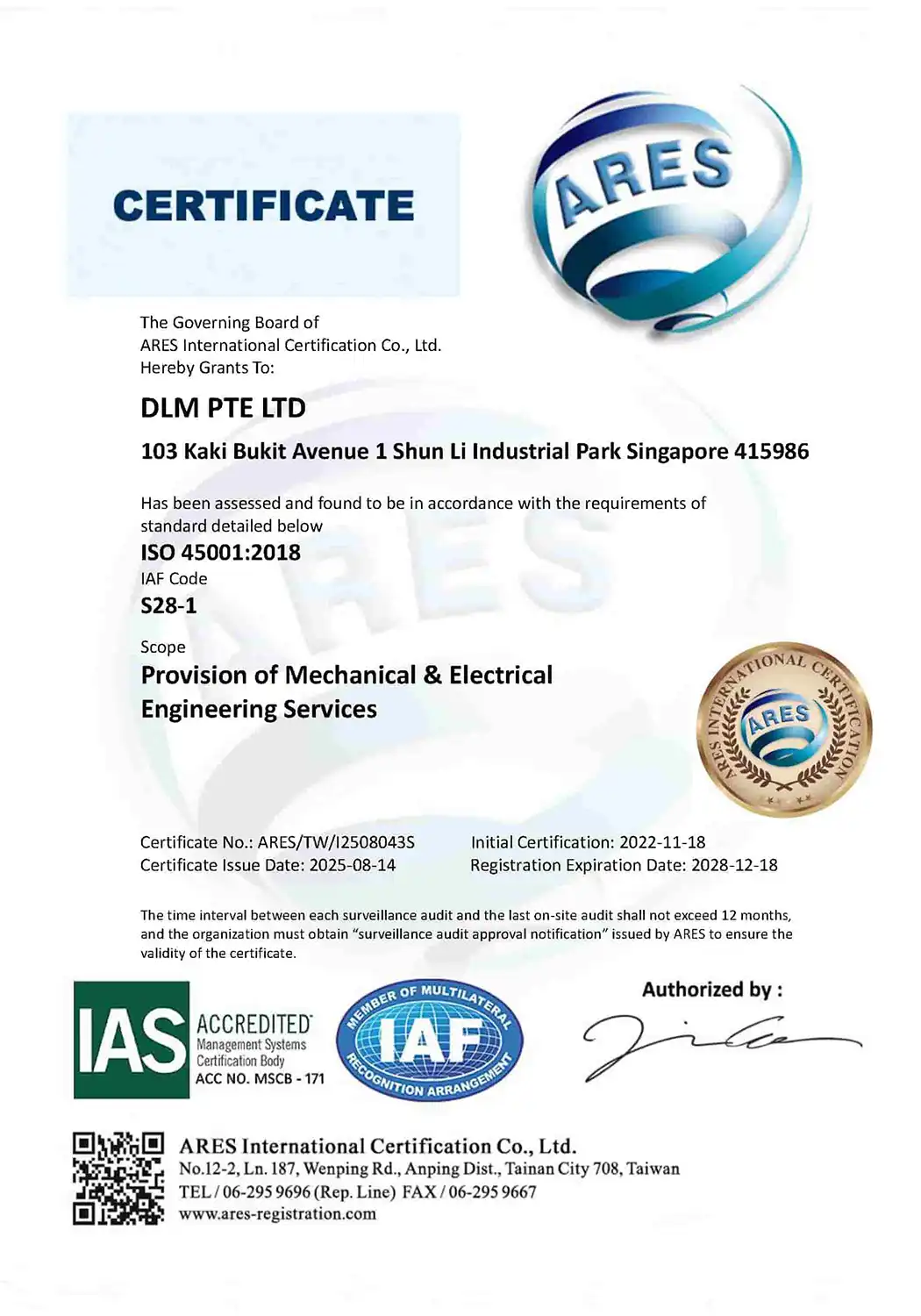
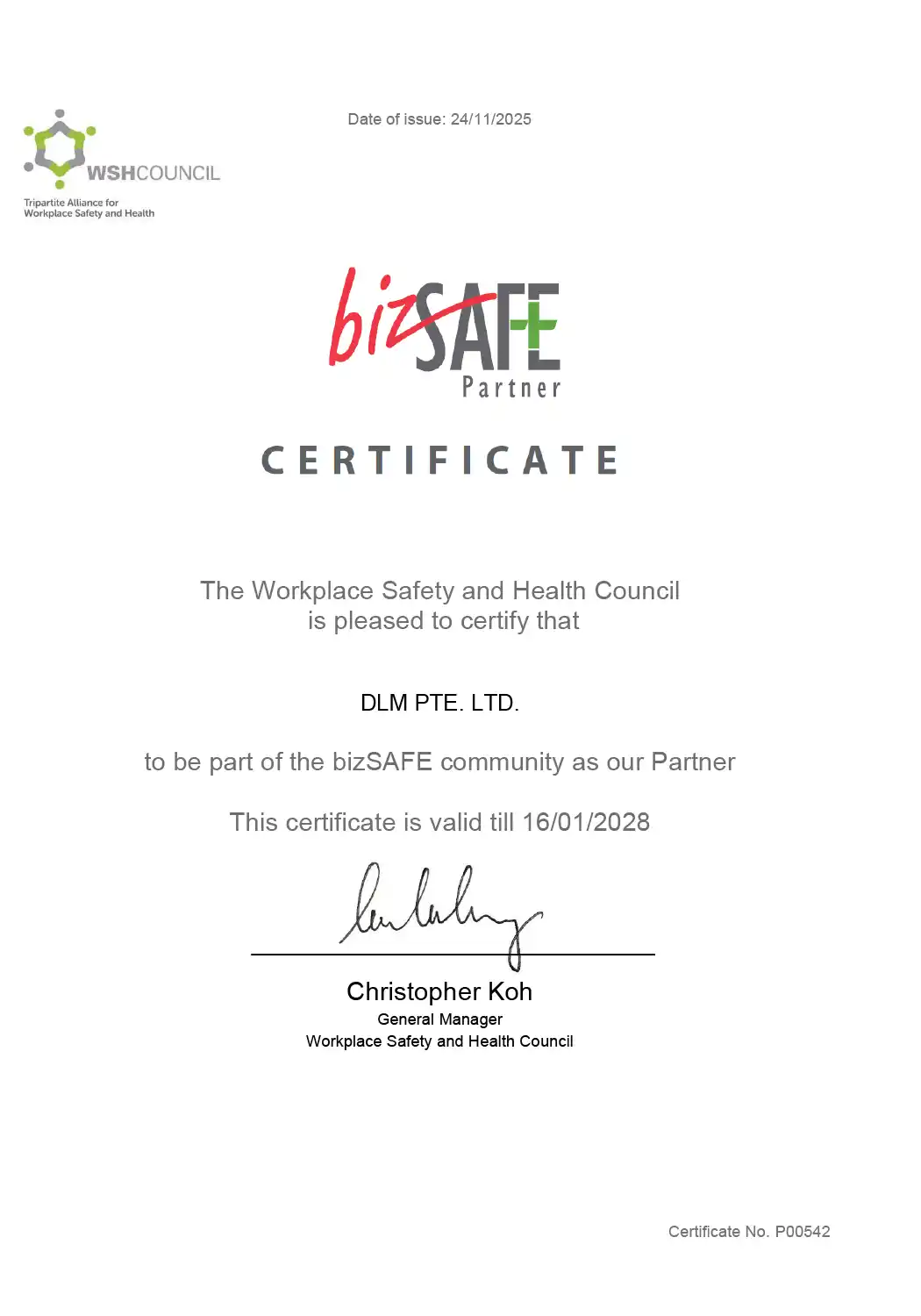
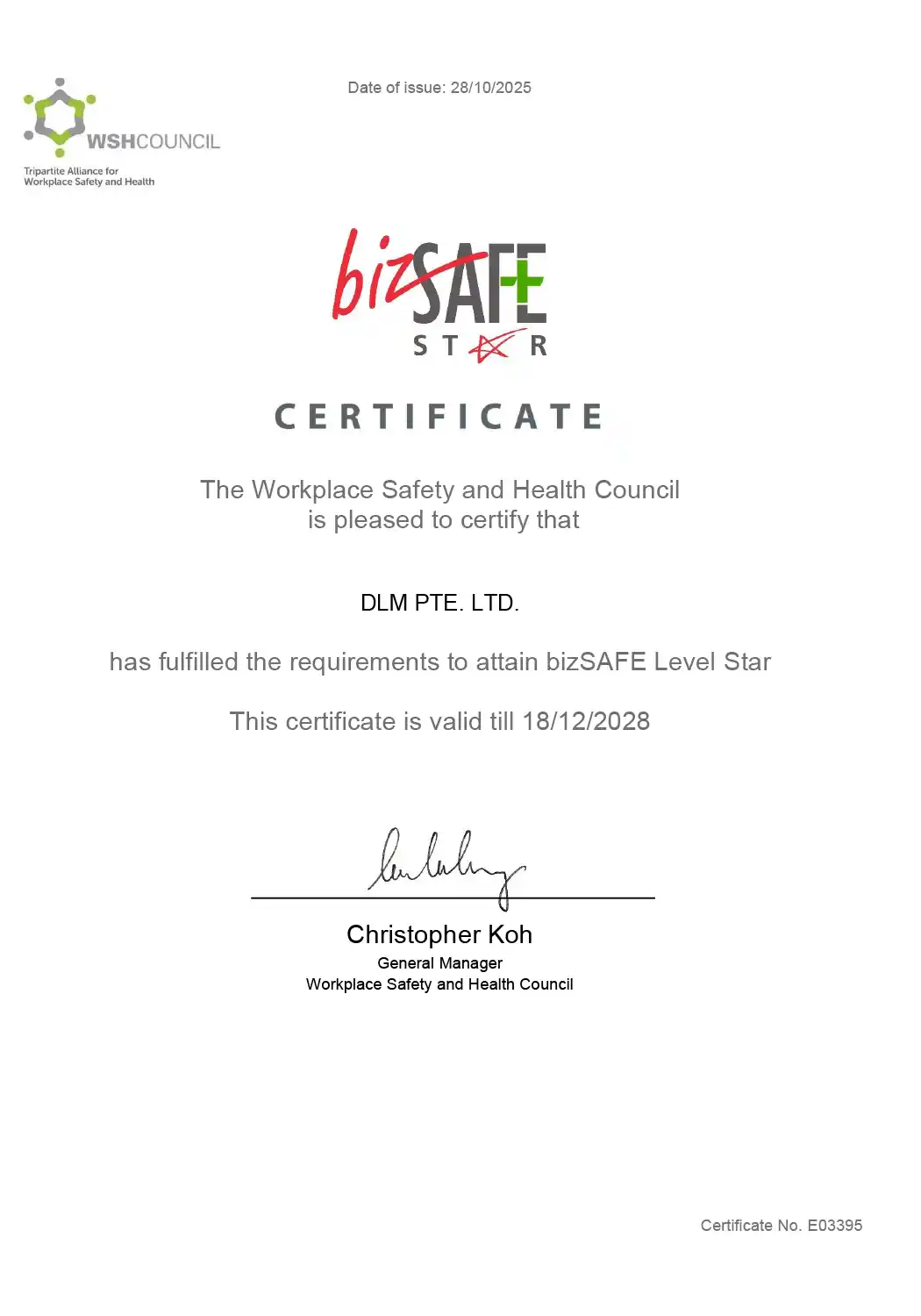
We are certified in ISO 9001 Quality Management, ISO 14001 Environmental Management, ISO 45001 Occupational Health & Safety, BizSAFE Partner, and BizSAFE Star. Our credentials are further strengthened by recognised sustainability capabilities, including SGBC Green Mark and EPC Chiller Plant Retrofit certification.
With proven expertise in Mechanical & Electrical Engineering, BIM, digital construction, Green Mark projects, and energy-efficient chiller plant retrofit solutions, we deliver safe, compliant, and future-ready engineering services built for performance, reliability, and long-term value.
Guided by Singapore’s Building and Construction Authority (BCA) standards, we continuously improve our certifications, compliance, training, and professional development to support reliable project delivery and operational excellence.
As a trusted M&E Engineering Company in Singapore, DLM Pte Ltd remains committed to delivering sustainable engineering solutions that create lasting value for our clients and communities.
Related Articles
Stay updated with the latest events and happenings at DLM Pte Ltd. Explore expert insights, practical tips, and updates on HVAC/ACMV maintenance, electrical solutions, and industry best practices to keep your systems efficient, safe, and reliable.
Looking for the latest industry insights and updates?
Explore DLM Pte Ltd’s news and perspectives on M&E engineering and innovation
Stay updated with our latest projects, industry trends, and engineering expertise.
Connect with our team to learn how we can support your next project.